
Use the Multiple-Choice question type to assess your students’ ability to select the most correct options from several possible answers.
Question setup
-
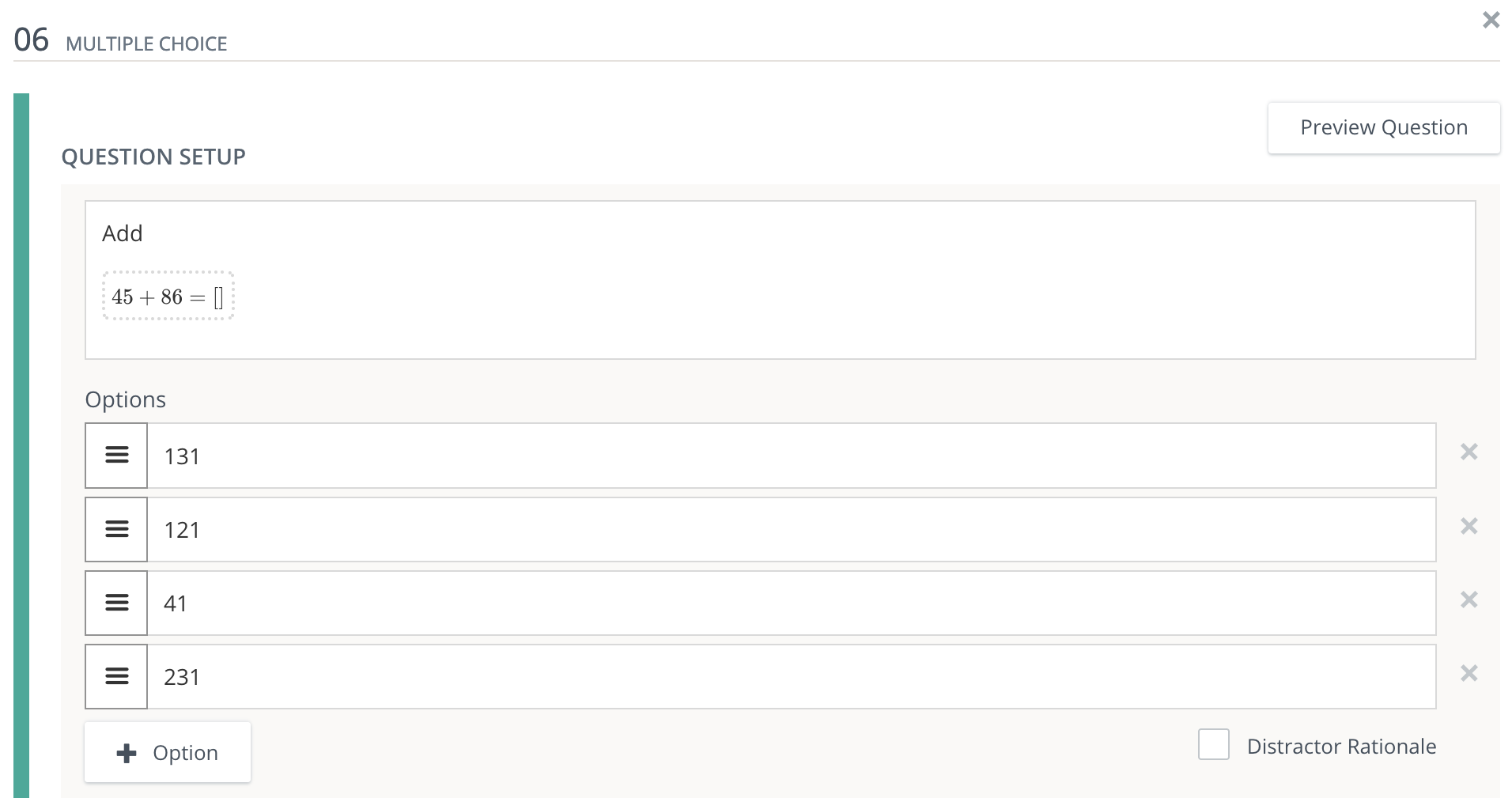
Enter your question in the Question Setup field.
-
Use the Rich Text Editor to format text or insert images and tables.
-
Hover over icons to display tooltips.
-
-
From Options, enter possible answers.
-
Click + Option to add more answers.
-
Click the X to remove an answer choice.
-
-
Optionally, select Distractor Rationale to add rationales for each answer option.
This is not a student feedback feature. Distractor rationales help instructors understand why students selected incorrect responses. This information appears alongside student responses in the Item Analysis report.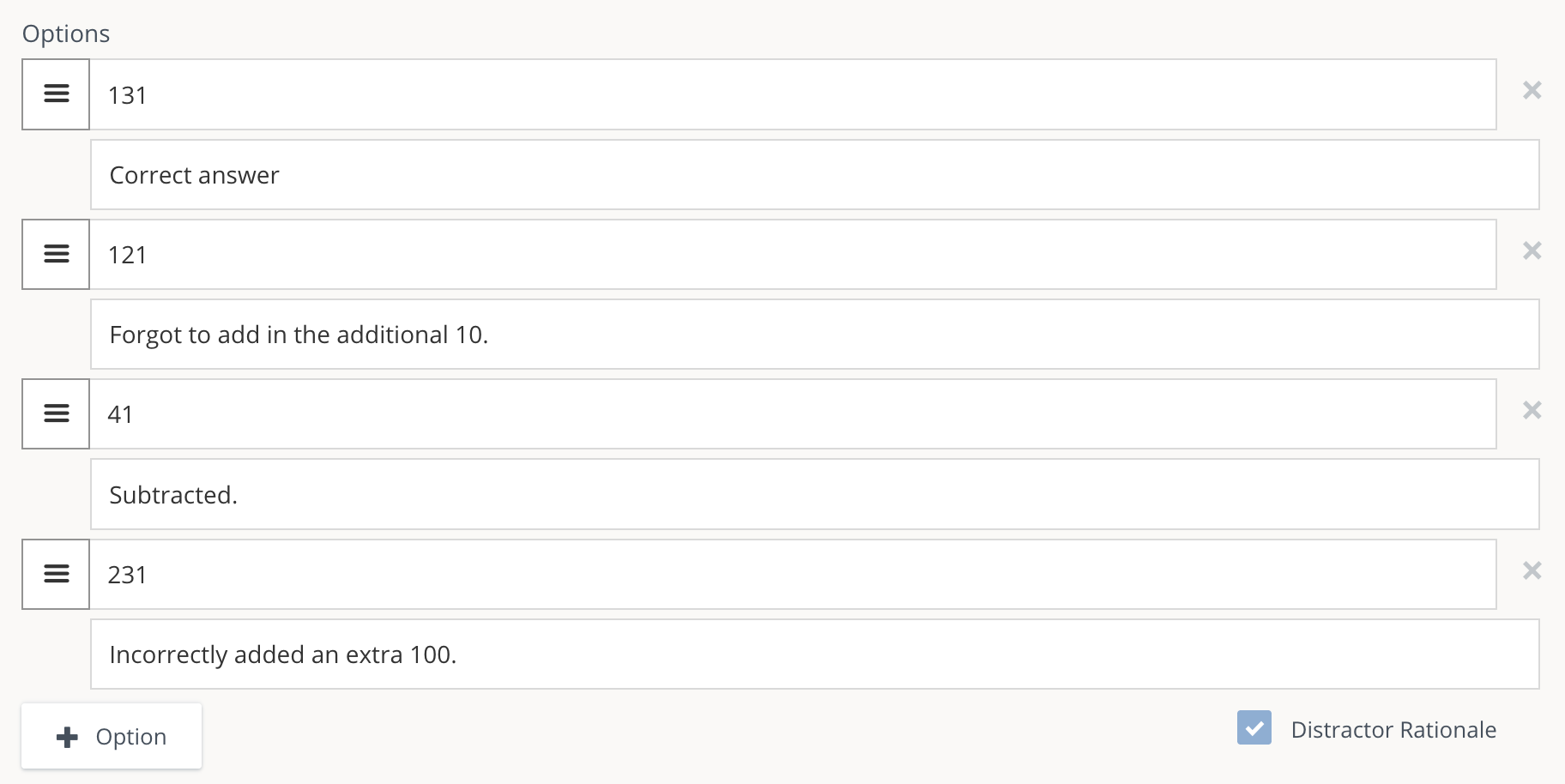
Correct answer setup
-
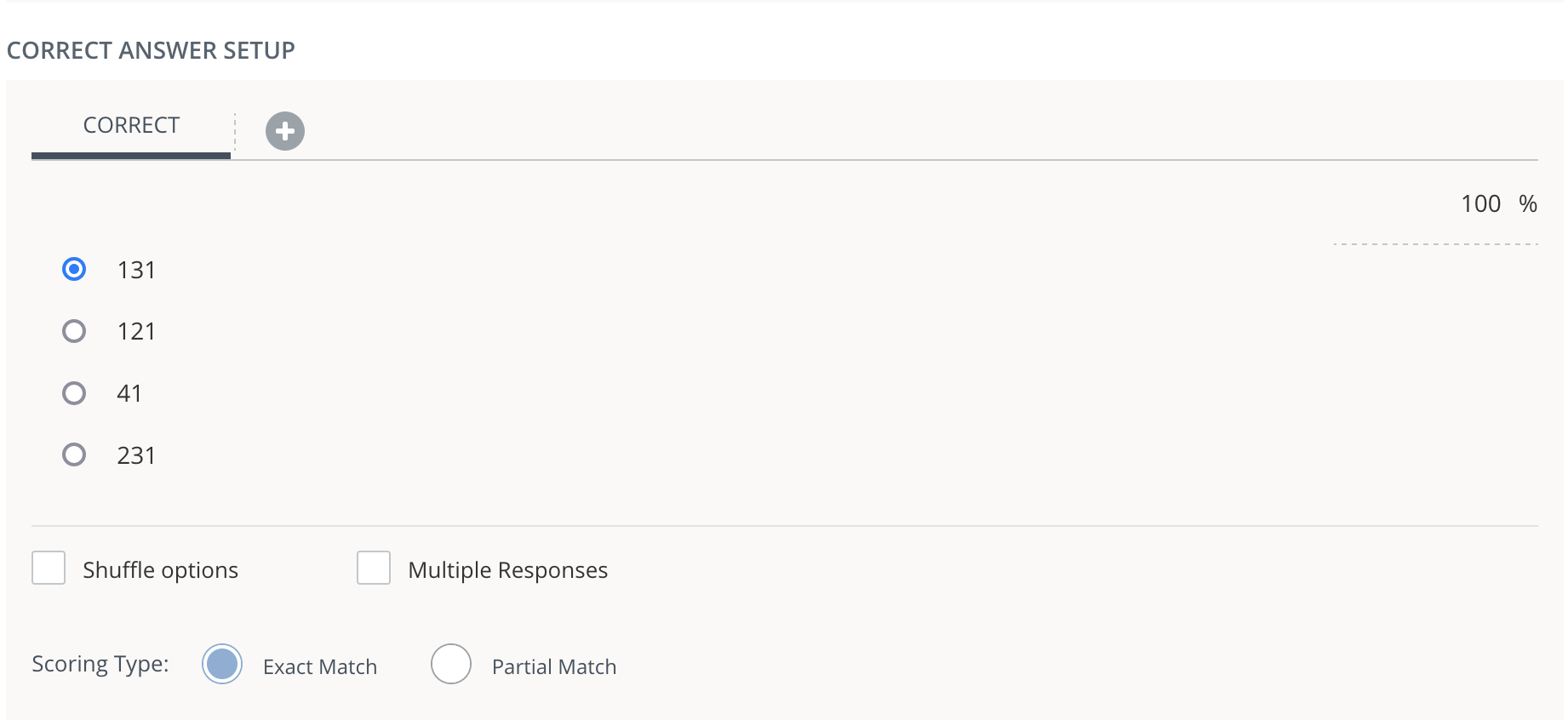
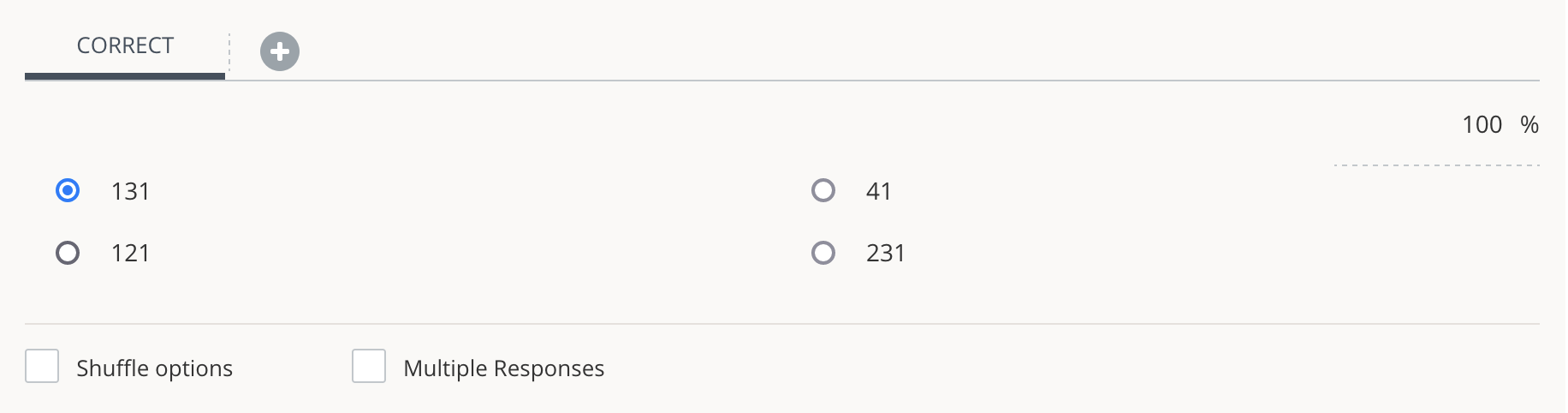
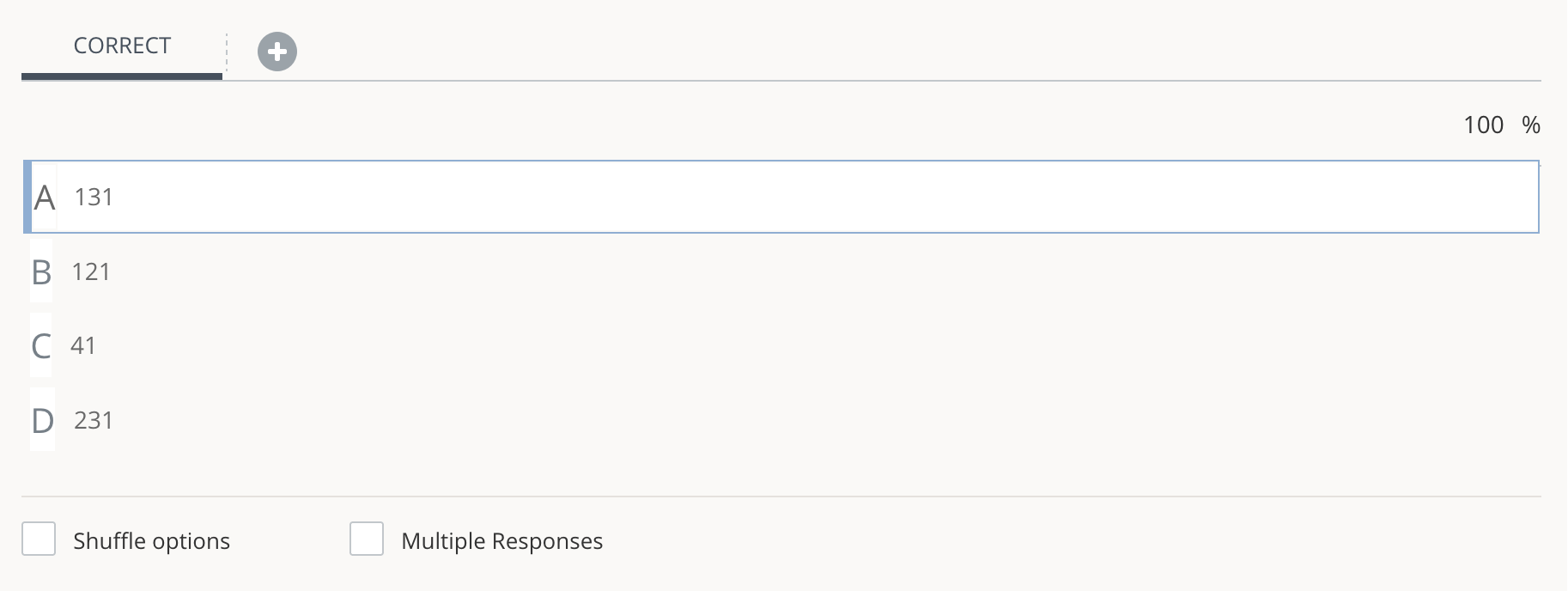
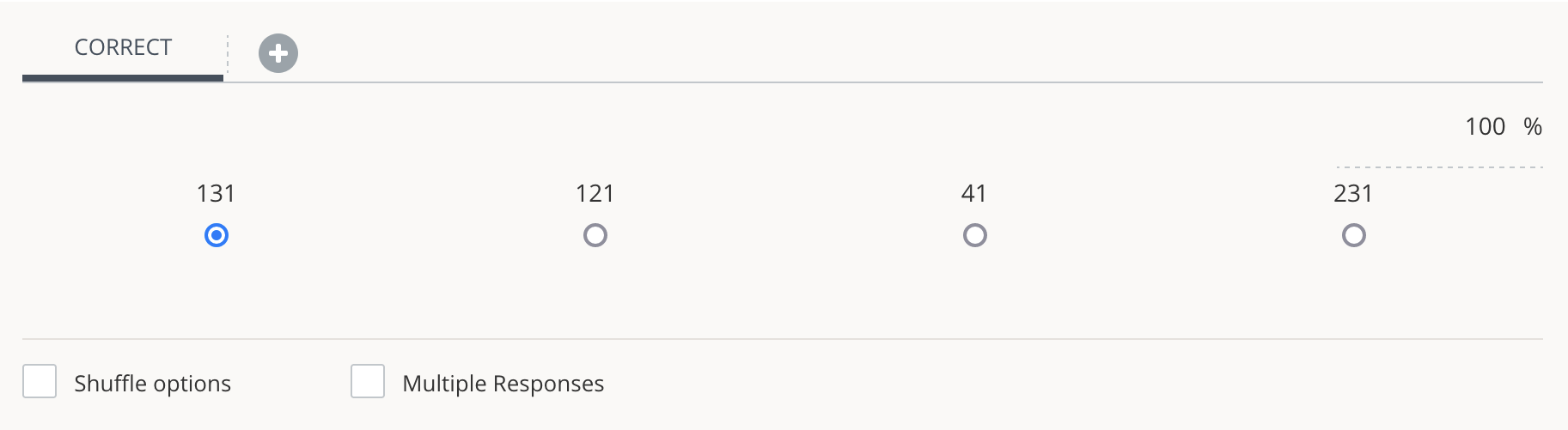
From Correct Answer Setup, select the correct answer.
-
Select Shuffle options to randomize the order in which the options are displayed to each student while taking the assessment.
-
Select Multiple Responses to allow students to choose more than one option when answering the question. Enable this setting for questions that ask students to choose all that apply, for example.
Add partial credit
To award partial credit for specific responses, click the + button from Correct Answer Setup to add an alternate answer.
In the percentage field for the additional answer, enter the percentage of possible points students can receive for this exact answer.
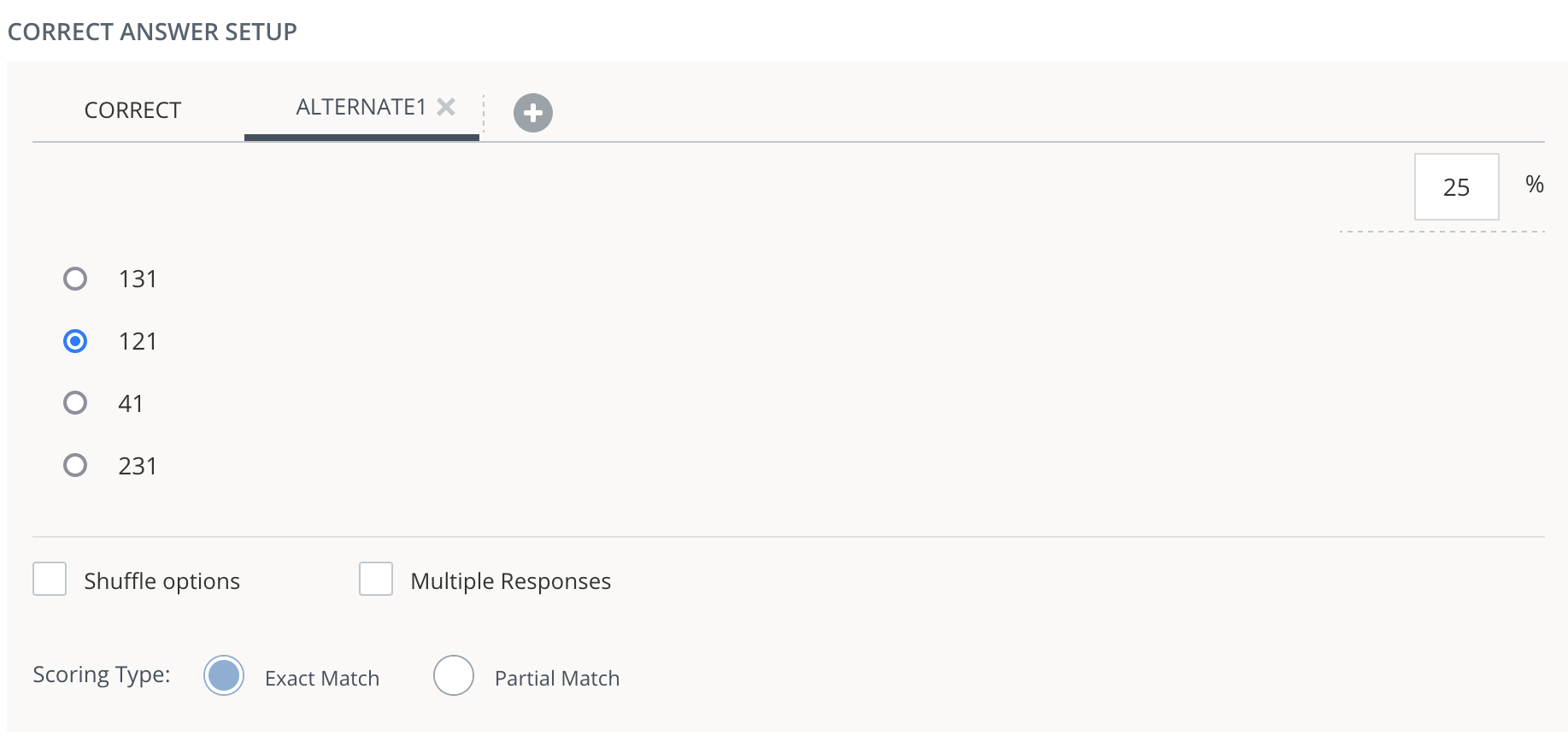
You can create multiple correct answer tabs with different configurations, each assigned a percentage of credit. For example, if a question allows multiple responses and A and D are correct, you could add a tab where selecting A and C earns 50% credit.
In some cases, you may choose not to award any points for selecting A and C, or you may assign a different value, such as 25% credit.
Configure scoring
Select a scoring method for the question.
-
Exact Match requires that students correctly respond to all choices. This option allocates 100% of the possible points for a correct response and zero points for an incorrect one.
-
Partial Match awards credit based on the number of correct responses. For scoring calculations and examples, refer to Partial match scoring.
Layout options
From Layout, choose an option from the list.
Enter the Number of columns for the answer option layout.
Author notes
Enter Author Notes to explain why certain choices are incorrect, or why partial credit was given for alternate answers. This field only displays to authors with edit access. This information will not display to students.
Align learning objectives
-
Click + Learning Objectives to display the Learning Objectives browser.
-
From the available learning objectives, select a category and choose from the objectives.
-
Click Align to add the objectives.
Preview and edit the question
-
Click Preview Question to review how the question will display to students.
-
Click Edit Question to return to the question editor. Alternatively, click X to close the question.