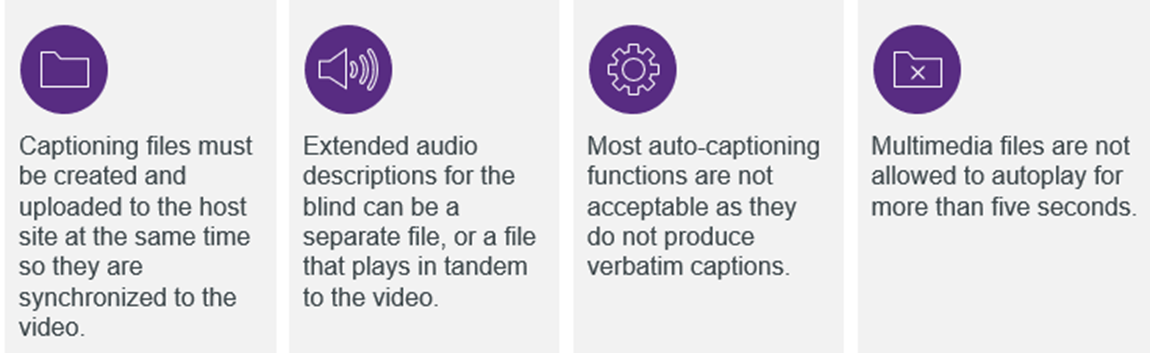
For multimedia files containing video plus audio to be accessible, there are three main items to consider: captioning, audio descriptions, and transcripts.
-
Captions can be open or closed and they must be verbatim with all narration. They also must identify the speakers, important background noises such as laughter, clapping, or important mood setting music including lyrics, if they are important to the scene.
-
For Blind users, we must consider what they cannot see. This means, when there is important action in the video, not described within the dialog, an audio description must be provided. This is an audio-only file describing what is happening in the video visually. It can be played in conjunction with the regular audio track, or in a separate extended track specifically for audio descriptions.
-
Multimedia files should also have a text transcript located in the vicinity of the video that is searchable by a search engine, and readable with refreshable braille devices.
Requirements of Transcripts are the same as for captions.
-
They must include dialogue, the identity of speakers, important sounds such as laughing, clapping, mood music, and lyrics to songs if they are important for the understanding of the content in parentheses or brackets.
-
Remember, transcripts are searchable by search engines and therefore improve Search Engine Optimization and can help individuals with learning disabilities or memory impairments comprehend content.